
AlloDx releases SuperNAT: a new generation of highly sensitive Nephrin antibody test
Recently, AlloDx launched a self-developed second-generation highly sensitive Nephrin antibody detection solution - Super Nephrin AntibodyTrap (SuperNAT for short), which can be used to detect minimal change kidney disease (MCD) and primary focal segmental glomerulosclerosis (FSGS), and can effectively diagnose and treat minimal change disease (MCD) and primary focal segmental glomerulosclerosis (FSGS).
Recently, AlloDx launched a self-developed second-generation highly sensitive Nephrin antibody detection solution - Super Nephrin AntibodyTrap (SuperNAT for short), which can be used to detect minimal change kidney disease (MCD) and primary focal segmental glomerulosclerosis (FSGS). It can be effectively distinguished from other kidney diseases that produce proteinuria (such as IgA nephropathy), and can be used to monitor the therapeutic effect of MCD/FSGS. In addition, this detection method is also suitable for assessing the risk of FSGS recurrence after kidney transplantation.
MCD is a common type of nephrotic syndrome (NS), especially in children. It accounts for 70%-90% of primary nephrotic syndrome in children. Some MCD patients (especially those with hormone dependence or resistance) may progress to FSGS. FSGS is one of the most severe forms of nephrotic syndrome in children and adults and often progresses to end-stage renal disease (ESRD). The causes of MCD and FSGS mainly include three categories: caused by genetic mutations in podocyte-related genes, secondary factors such as infection or drug use, and unexplained primary factors. Genetic mutations account for 8-14%, secondary factors account for 20-30%, and the rest are caused by unknown primary factors.
Studies in recent years have pointed out that Nephrin antibodies (Anti-nephrin Ab) play an important role in the occurrence of MCD and FSGS. A multicenter study conducted by Shirai et al. revealed that elevated levels of Nephrin antibodies can predict the recurrence of FSGS and are closely related to the degree of proteinuria in post-transplantation patients. Hengel et al. also found that patients with positive MCD and FSGS showed more severe nephrotic syndrome compared with patients with negative Nephrin antibodies.
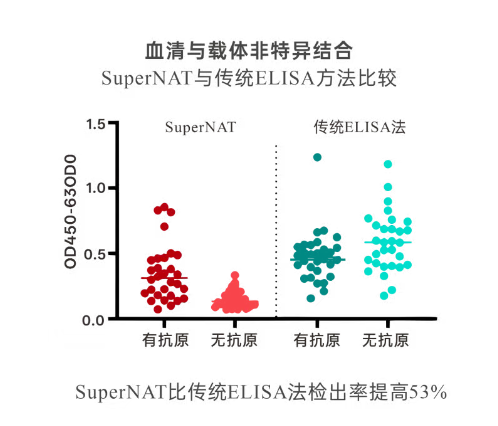
Due to the low level of Nephrin antibodies in patients' serum, traditional ELISA detection methods are often accompanied by problems such as high background noise and serious non-specific binding, which affects the accuracy of the detection. The SuperNAT second-generation highly sensitive Nephrin antibody detection solution launched by AlloDx can effectively reduce detection background noise. Compared with the traditional ELISA method, the detection rate has increased by 53%, providing clinicians with a more comprehensive analysis perspective.
The AlloDx SuperNAT test is based on the 95% percentile of the measured value of creatinine in normal people, and establishes 45U/mL as the optimal reference threshold. It only needs to collect 3mL of peripheral blood from the patient to achieve efficient and sensitive detection.
Note: Teachers who are interested in this project and need to submit it for testing can contact the AlloDx medical representative in your city.
Some original figures, videos and downloadable materials are provided in Chinese.