
New: Comprehensive Genetic Testing for Alport Syndrome
Alport syndrome (AS), also known as hereditary progressive nephritis, is a primary glomerular basement membrane disease caused by mutations in the gene COL4An (n=3, 4, 5) encoding the α3-α5 chain of basement membrane type IV collagen. The clinical characteristics are hematuria, proteinuria and progressive renal dysfunction. Some patients
What is Alport syndrome?
Alport syndrome (AS), also known as hereditary progressive nephritis, is a primary glomerular basement membrane disease caused by mutations in the gene COL4An (n=3, 4, 5) encoding the α3-α5 chain of basement membrane type IV collagen. The clinical characteristics are hematuria, proteinuria, and progressive renal dysfunction. Some patients may be complicated by extrarenal manifestations such as sensorineural deafness, eye abnormalities, and esophageal leiomyoma.
Why is Alport syndrome diagnosed?
There is currently no specific clinical treatment for AS, but studies have shown that early diagnosis and early intervention and symptomatic treatment can effectively delay the time it takes for patients to reach end-stage renal disease. Gross et al.'s (2012) study showed that early intervention of ACEi in patients with Alport syndrome can delay the onset of ESRD in AS patients by up to 13 years.
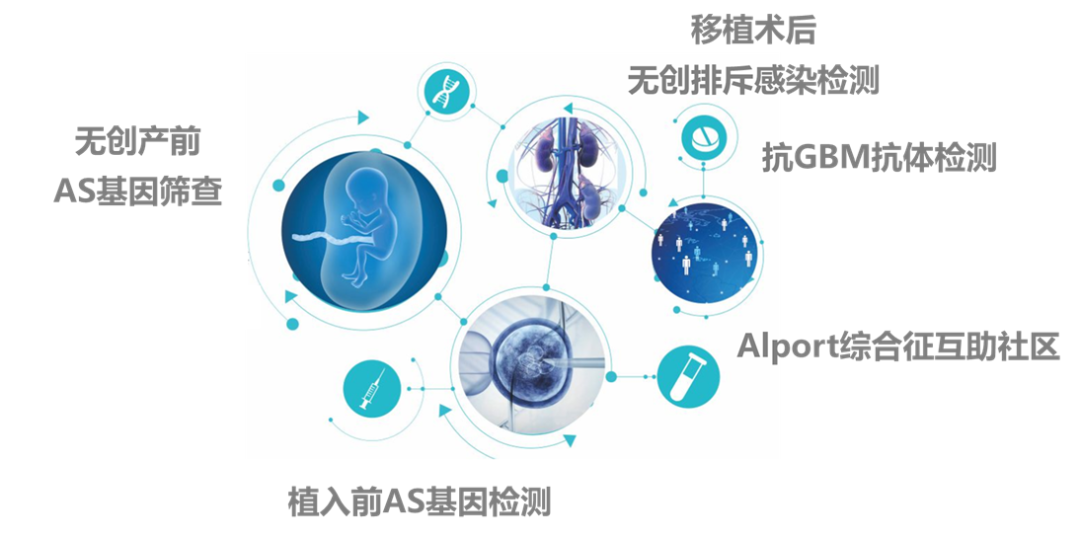
In addition, AS is hereditary, and its inheritance pattern can cover three classic Mendelian inheritance rules, including X-linked dominant inheritance, autosomal dominant inheritance, and autosomal recessive inheritance. By clarifying the mutation sites and inheritance patterns of AS-causing genes, genetic counseling, non-invasive prenatal screening or pre-implantation AS gene testing can be used to achieve prenatal and postnatal care.
Finally, when renal replacement therapy is required for the development of ESRD, it is also meaningful for kidney donor selection and early monitoring of transplanted kidney function. If relatives are selected as kidney donors, heterozygous female carriers of the COL4A5 gene mutation, such as the patient's mother, can serve as kidney donors if they have no clinical symptoms of proteinuria, decreased renal function, and deafness, while men cannot serve as kidney donors because they may be in the advanced stage of kidney disease. Because some AS patients will produce anti-glomerular basement membrane (GBM) antibodies after kidney transplantation and develop anti-GBM nephritis in the transplanted kidney, AS patients need to pay close attention to serum anti-GBM antibodies and renal function within one year after surgery.
Why do AS patients need genetic testing?
Currently, AS is mainly diagnosed clinically through the following methods:
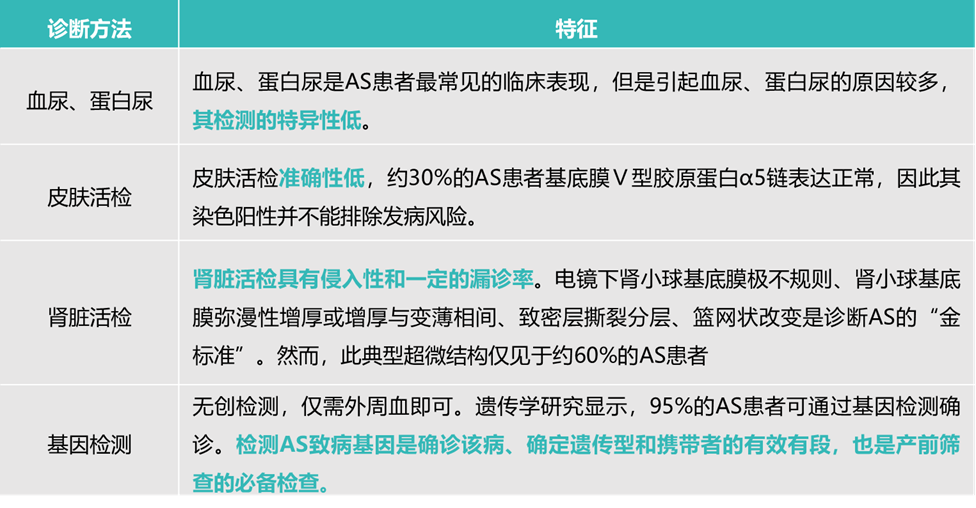
AlloDx Alport Syndrome Genetic Testing New Solution
The Alport syndrome full gene detection project independently developed by AlloDx uses target region multiplex PCR capture sequencing technology to comprehensively detect 8 AS-related pathogenic genes, including COL4A3, COL4A4, COL4A5, COL4A6, CD151, FN1, LMX1B and MYH9 genes, covering 165 exons and related intron regulatory regions, involving 1525 known mutation sites, and can effectively discover new disease-causing sites. Detected mutation forms include single base mutations, insertions/deletions, and chromosomal copy number variations. Really achieve full coverage in one detection without any missed detection.
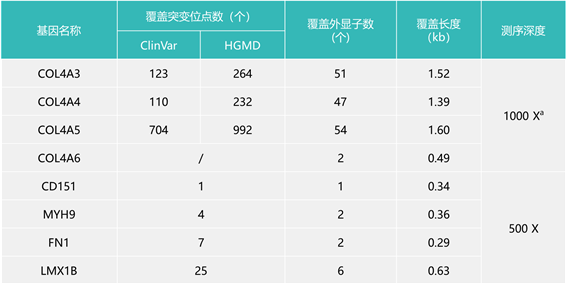
a This detection depth detects copy number variations simultaneously.
AlloDx also provides post-stage one-stop testing services for AS patients, including:
References:
[1] Expert recommendations on diagnosis and treatment of Alport syndrome, [J]. Chinese Journal of Nephrology, 2018, 34(3): 227-231
[2] Gross. O et al, Early angiotensin-converting enzyme inhibition in Alport syndrome delays renal failure and improves life expectancy, Kidney International (2012) 81, 494–501
[3] E.E. Groopman, et al, Diagnostic Utility of Exome Sequencing for Kidney Disease,N Engl J Med. 2019 January 10; 380(2): 142–151.
[4] Gross O et al, Advances and unmet needs in genetic, basic and clinical science in Alport syndrome: report from the 2015 International Workshop on Alport Syndrome, Nephrol Dial Transplant (2016) 0: 1–9
Some original figures, videos and downloadable materials are provided in Chinese.