
Science Frontier: Regarding ddcfDNA, what was discussed at the ATC meeting? (1)
Affected by the COVID-19 epidemic in 2020, the American Annual Transplantation Conference (ATC), originally scheduled to be held in Philadelphia from May 30 to June 3, will be held online for the first time this year to present the most cutting-edge research progress in this field to global transplant experts. The conference content covered a number of hot topics and clinical key and difficult points. Among them, the transplantation liquid biopsy section presented a total of 51 organs from
Affected by the COVID-19 epidemic in 2020, the American Annual Transplantation Conference (ATC), originally scheduled to be held in Philadelphia from May 30 to June 3, will be held online for the first time this year to present the most cutting-edge research progress in this field to global transplant experts. The conference content covered a number of hot topics and clinical key and difficult points. Among them, the transplantation liquid biopsy section presented a total of 51 organ transplantation centers.33 relevant research reports。
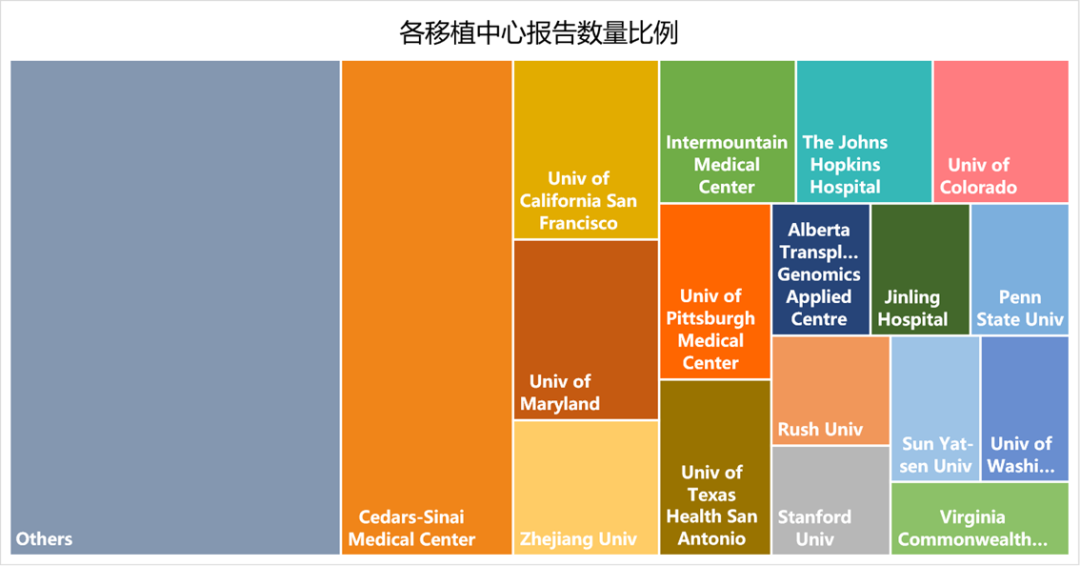
Judging from the research content of ATC in the past three years, organ transplant liquid biopsy (donor-derived cell-free DNA, ddcfDNA) has become a current research hotspot. There are 51 related studies from North American organ transplant centers (18-20 years), accounting for 77%, among which theCedars-Sinai medical center in Los Angeleshas the largest number of studies (14 articles).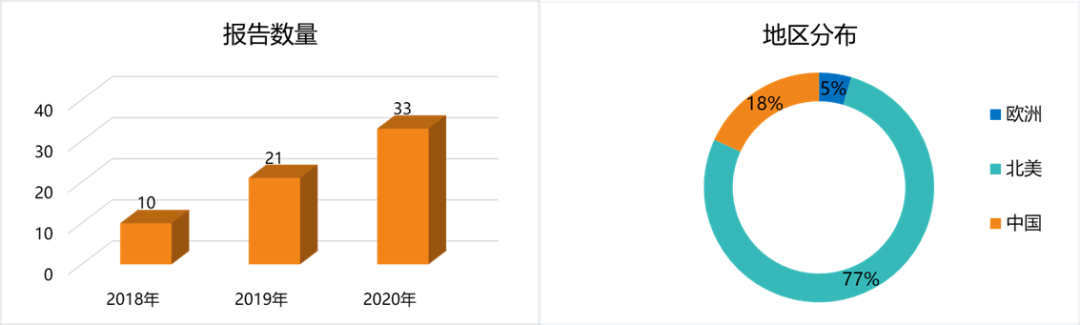
What are the highlights of the research on ddcfDNA at this annual meeting? The editor will give you a detailed introduction in three issues. Let’s take a look at the selected excerpts of this issue first.
01
Zhang H, Nast CC, Huang E, Ammerman N, Vo AA, Jordan SC, Toyoda M. Donor Derived Cell Free DNA (dd-cfDNA) and Gene Expression Signatures of Antibody-Mediated Rejection (ABMR) May Improve Accuracy of ABMR Diagnosis (Dx) [abstract]. Am J Transplant. 2020; 20 (suppl 3).
Studies from transplant centers such as Cedars-Sinai Medical Center have shown that ddcfDNA has important clinical significance for early diagnosis of antibody-mediated rejection (ABMR). This study combined ddcfDNA detection and the expression score (GS) of ABMR-related genes (KLRF1, SH2D1B, CCL3 and CCL4) to explore whether the accuracy of diagnosing ABMR can be improved.
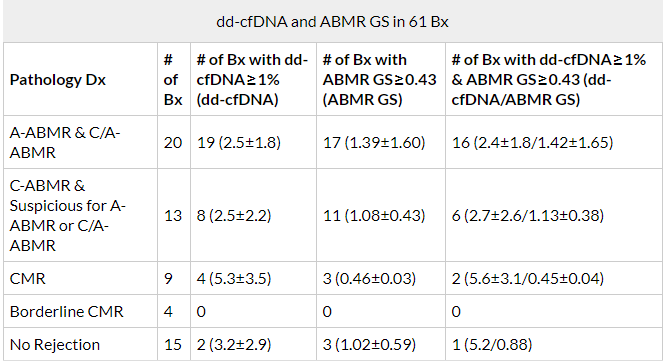
The results show,Both ddcfDNA and GS have good performance in diagnosing ABMR.. Among the 20 patients with active ABMR and chronic active ABMR diagnosed by puncture, 19 had ddcfDNA>1%, 17 had GS>0.43, and a total of 16 cases were consistent with both. GS test values are more sensitive to anti-ABMR treatment. In addition, the combination of GS and ddcfDNA can predict the occurrence of ABMR early (previous negative needle biopsy or cell-mediated rejection alone).
02
DePasquale E, Kobashigawa J, Pinney S, Khush K. dd-cfDNA as a Risk Factor for Initiating De-Novo Donor Specific Antibodies in Heart Transplantation [abstract]. Am J Transplant. 2020; 20 (suppl 3).
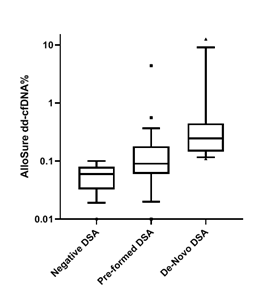
In kidney and lung transplant studies, it has been shown that ddcfDNA content in recipients increases before de-novo DSA is produced. Research from Keck Hospital of USC and others aims to understand whether ddcfDNA is related to the generation of de-novo DSA after heart transplantation.
A total of 67 heart transplant patients and 284 samples were enrolled in this study (samples that experienced rejection were excluded). The results showed that the ddcfDNA content in DSA-negative patients was significantly lower than that in DSA-positive patients (P<0.001), while the ddcfDNA content in patients with de-novo DSA was higher than that in patients with pre-existing DSA (P=0.001). It shows that the generation of de-novo DSA is related to ddcfDNA, but the molecular mechanism and related clinical significance of this phenomenon need further study, because not all DSA are related to poor prognosis.
03
Waide M, Carmody J, Restaino IG. Donor-Derived Cell-Free DNA (dd-cfDNA) Levels in Stable Pediatric Kidney Transplant Recipients [abstract]. Am J Transplant. 2020; 20 (suppl 3).
In adult kidney transplant patients, ddcfDNA has been proven to be a highly sensitive biomarker for diagnosing rejection and is widely used clinically. However, there is still a lack of research data on ddcfDNA in the diagnosis of renal transplant rejection in children. Pediatric kidney transplant specialists from Eastern Virginia Medical School studied changes in ddcfDNA levels in pediatric kidney transplant patients.
This study enrolled 26 pediatric kidney transplant patients, all of whom were in stable condition and had no rejection. The detection results showed that the median ddcfDNA was 0.2% (IQR 0.12-0.32%), and the coefficient of variation was the same as previously reported in adult kidney transplant patients.To determine the rejection threshold (cut-off value) of ddcfDNA in pediatric kidney transplant patients, positive patients need to be enrolled.
04
Guo L, Wang R, Lv J, Shen J, Wu J, Chen J. Prognostic Value of Dd-cfDNA Assay in Acute Renal Rejection Therapy: A Prospective Cohort Study [abstract]. Am J Transplant. 2020; 20 (suppl 3).
It is still unclear whether ddcfDNA can be used to detect the therapeutic effect of rejection. The Kidney Disease Center of the First Affiliated Hospital of Zhejiang University enrolled 28 patients with acute rejection and detected the changes in blood ddcfDNA content before and after rejection treatment. The results showed that the ddcfDNA content in the patient's blood dropped from 2.566±0.549% to 0.773±0.116% (P < 0.001).It shows that ddcfDNA can be used to detect rejection and evaluate the treatment effect.In addition, the use of methylprednisolone affects the content of ddcfDNA.
05
Stites E, Kumar D, Olaitan O, Gupta G. Utility of dd-cfDNA in TCMR 1A and Borderline Allograft Rejection [abstract]. Am J Transplant. 2020; 20 (suppl 3).
The value of blood ddcfDNA for the early diagnosis of T cell-mediated rejection (TCMR) is unclear.
A study from the University of Colorado et al. performed ddcfDNA testing on 79 patients diagnosed with TCMR IA or borderline rejection (Banff 2017) by needle biopsy from June 2017 to May 2019 in 11 transplant centers. Stratified by dd-cfDNA >0.5% and <0.5%. Patients with ddcfDNA >0.5% were associated with poor prognosis (GFR, p=0.0040 and de novo DSA, p<0.0001), and were also associated with future rejection or persistent rejection (p=0.0028).Based on these results, ddcfDNA can reflect a more complete manifestation of rejection heterogeneity and provide more valuable clinical reference information on the risk of damage, thereby better understanding the prognosis of kidney transplantation.
In the next issue, the editor will continue to pay attention to the research progress of ddcfDNA in the field of transplantation on ATC.

Some original figures, videos and downloadable materials are provided in Chinese.