
Organ transplantation is an effective means to treat end-stage organ diseases, but the differences in histocompatibility antigens of transplanted organs can easily induce rejection reactions. Regulatory T cells (Tregs) are a subpopulation of T cells that negatively regulate the body's immunity and have the effect of inhibiting rejection reactions. Allogeneic antigen-presenting cells can long-term stimulate recipient Treg cells in vitro to obtain donor-specific Treg cells. However, this method is not feasible in actual clinical applications. By specifically modifying Tregs cells using chimeric antigen receptor technology (CARs), donor-specific antigens can be successfully chimeric to the surface of Treg cells, overcoming the limitations of antigen stimulation-based experimental protocols, thus regulating changes in the body's immune function in real time, providing a novel and promising treatment option for inducing immune tolerance.
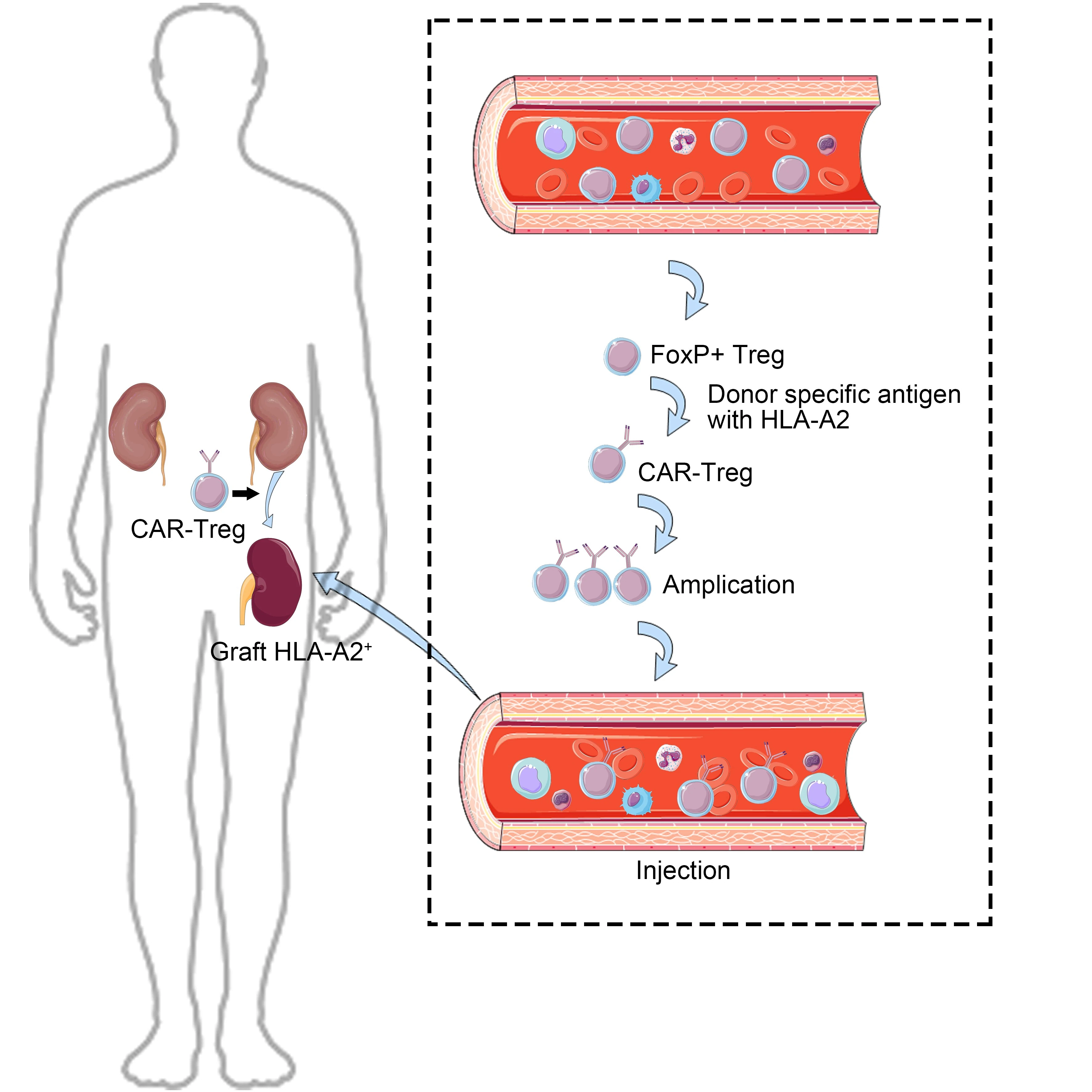
Chimeric HLA-A2 antigen generates donor-specific Treg cells