
Graft versus host disease (GvHD) is tissue damage caused by donor-derived immune cells reconstituted in the patient's body after hematopoietic stem cell transplantation (HSCT) attacking the recipient's organs. It is a serious post-transplant complication with an incidence rate of 60%-80%. Severe GvHD is one of the important reasons for transplant failure.
GvHD is divided into acute graft-versus-host disease (aGvHD) and chronic graft-versus-host disease (cGvHD). aGvHD usually occurs within 100 days after transplantation, and the main target organs of aGvHD are the skin, gastrointestinal tract, and liver. Then in a randomized prospective study of acute GvHD prevention, cutaneous, gastrointestinal, and liver involvement were seen in 70%, 74%, and 44% of patients, respectively [1]. Therefore, not all GvHD patients have typical clinical symptoms, which also causes trouble in the accurate diagnosis of GvHD. With the development of molecular biology, finding GvHD-related molecular markers in blood is crucial for accurate diagnosis of GvHD.
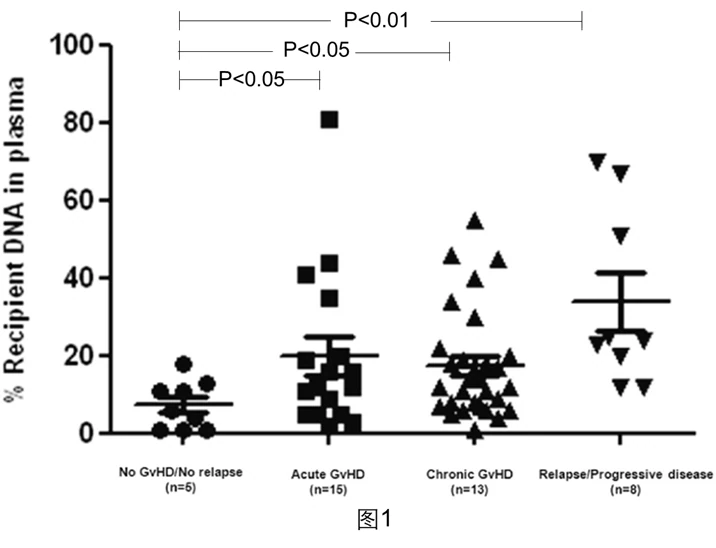
Changes in the content of recipient-derived cell-free DNA (host-derived cfDNA, hd-cfDNA) can reflect tissue damage in real time. Analysis of changes in the content of hd-cfDNA in peripheral blood and changes in donor-derived cfDNA (ddcfDNA) in leukocytes can accurately determine the risk of GvHD (Figure 1). AlloDx uses high-throughput SNP capture sequencing technology to accurately quantify hd-cfDNA in patients' peripheral blood. It uses the company's independently developed bioinformatics algorithm model GvHD-NIT to accurately assess the risk of GvHD, and the detection accuracy is better than STR-based qPCR detection.
[1] A.C. Harris et al. / Biol Blood Marrow Transplant 22 (2016) 4-10
Detection advantages
Precise quantification: Using high-throughput sequencing technology, 2,000 SNP sites can be detected at one time
Deep sequencing: Sequencing depth up to 1000X, results are more accurate
Non-invasive real-time: only peripheral blood is needed to detect new genetic markers and dynamically monitor the risk of GvHD
Rigorous and professional: Bioinformatics experts with more than 10 years of experience provide report interpretation
Sample type

For more information related to testing, please contact your local sales staff. Or call 16602137701 (Ms. Wang).