
Transplantation Proceedings | AlloDx joins hands with domestic organ transplant experts to develop a new method for detecting postoperative rejection and infection in organ transplant patients
In September 2019, the research results on a new method for detecting rejection and infection in organ transplant patients, jointly led by the School of Life Sciences of Jiangsu University, the Second Xiangya Hospital of Central South University, and Shanghai AlloDx Technology Co., Ltd., were published in the international journal Transplantation Proceedings.
Summary
In September 2019, the research results on a new method for detecting rejection and infection in organ transplant patients, jointly led by the School of Life Sciences of Jiangsu University, the Second Xiangya Hospital of Central South University, and Shanghai AlloDx Technology Co., Ltd., were published in the international journal Transplantation Proceedings.
Research background
Rejection and infection are common complications that affect the quality of life and life safety of transplant patients after surgery. Plasma cell-free DNA detection is an important method for diagnosing and monitoring postoperative rejection and infection. Detection of cell-free DNA (cfDNA) in plasma is an important method for diagnosing and monitoring rejection and infection.
research methods
In this study, a total of 32 plasma samples from 30 kidney transplant patients were collected, and tissue biopsies were performed on all samples. Donor-derived cell-free DNA (ddcfDNA) was quantified based on targeted capture sequencing (6200 SNPs) and maximum likelihood estimation (MLE). In addition, specific probe sequences for organ transplant-related pathogenic bacteria were added to the hybridization capture panel, and non-human cfDNA in plasma was further analyzed in the offline data to detect pathogenic microbial infections in patients.
Research results
In the rejection test, the ddcfDNA level was significantly different between the rejection group and the non-rejection group (p-vaule<0.01).
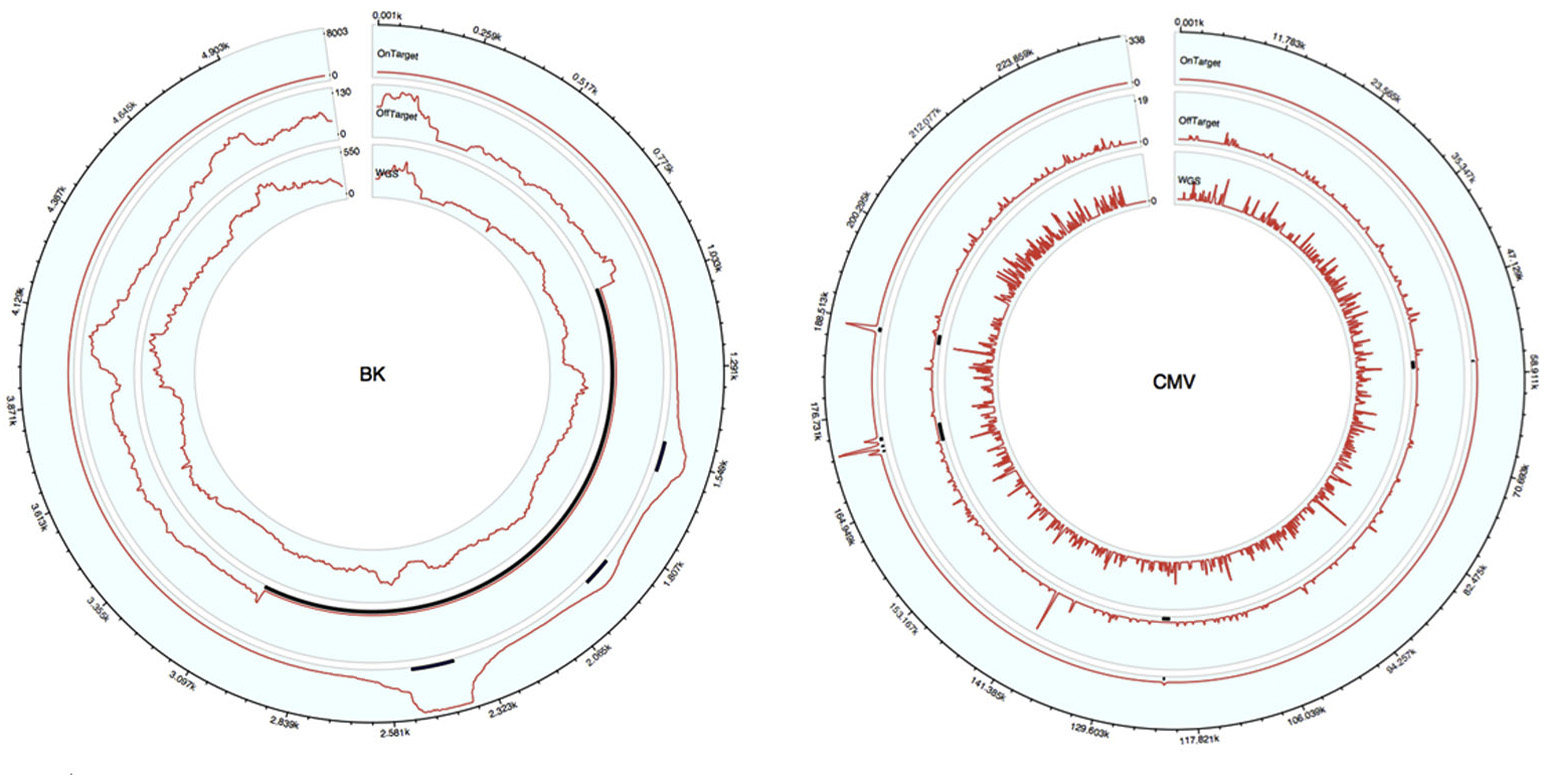
In infection detection, target region hybridization capture has a significant enrichment detection effect on transplantation-related pathogenic bacteria. For example, the figure above shows one case each of BK virus infection (114 reads) and cytomegalovirus infection (489 reads). There is obvious enrichment in the position of the designed probe on the genome. In addition, one case of BK virus infection and one case of cytomegalovirus infection were detected using this method. The enrichment efficiency of viral sequences was 114 times and 489 times respectively, which was consistent with the clinical results.
Conclusion
This method can detect postoperative rejection and infection in kidney transplant patients at the same time, providing a reference for clinical immunotherapy.
Some original figures, videos and downloadable materials are provided in Chinese.